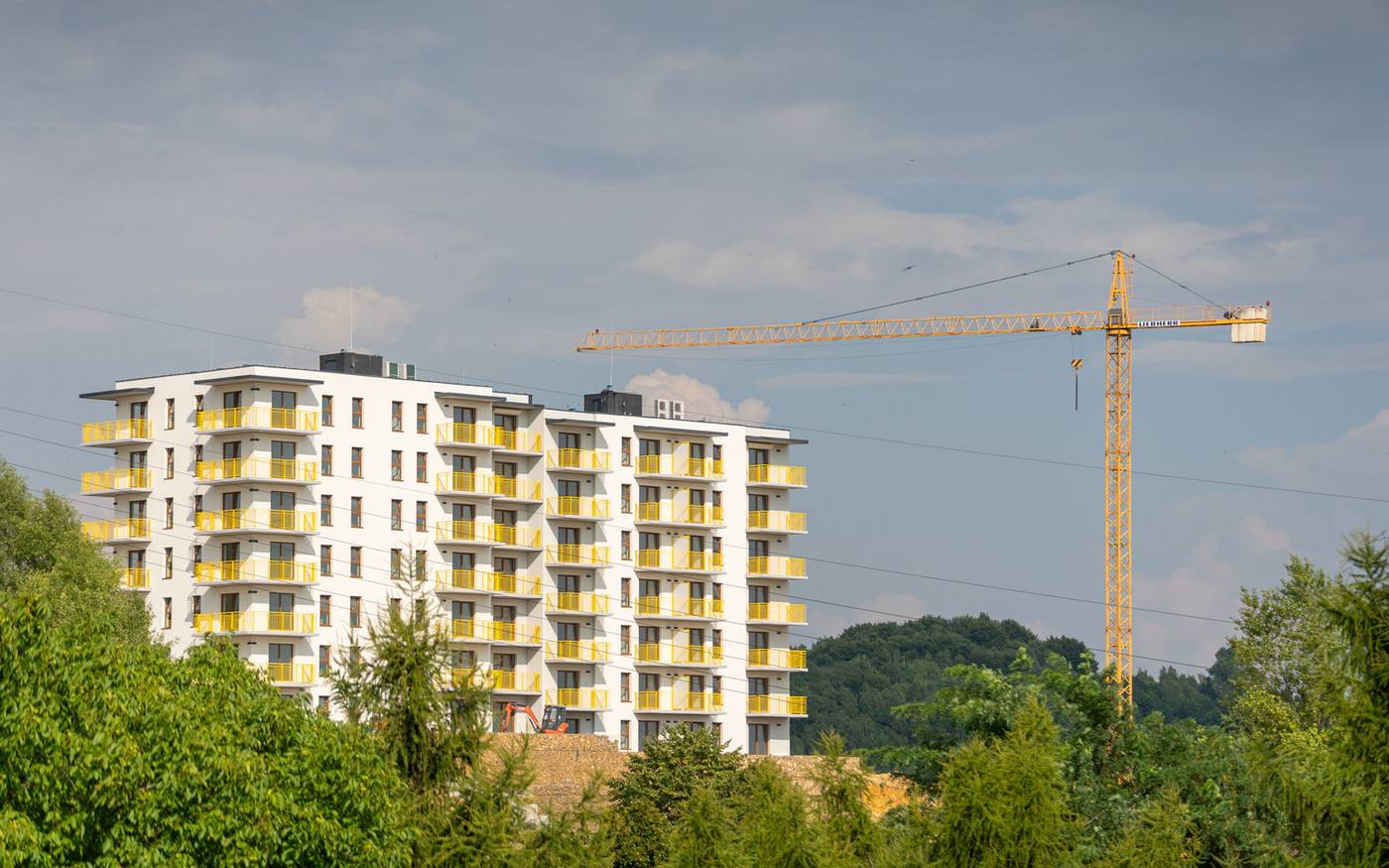

This engagement came to us from an existing client. The clients are an established husband-and-wife development and investment company operating across the BC Interior, with more than twenty years of building behind them and a portfolio they manage entirely themselves. She handles the property management and the day-to-day accounting; they employ their own maintenance technician. They had recently completed a small purpose-built rental project in a West Kootenay city.
The building was financed for construction by a credit union, and by the time it reached full occupancy the loan sitting on it was about $1,391,000. That is the point at which most developers of a project this size simply renew with the construction lender and move on. Our clients wanted to know whether CMHC-insured financing was available to them.
It is a fair question and the answer is not obvious. CMHC financing is often discussed in the context of large projects, and a building of this size is not what most people might picture. It is also enough work that plenty of lenders and brokers will not take it on for a loan under $2 million. We prepared the underwriting package under CMHC's Standard Rental program, with the appraisal, the environmental report, the certified rent roll and the sponsor's net worth all assembled in the form CMHC and the lender wanted to see it.
Additional leverage: the loan closed at $2,023,324, inclusive of the CMHC application fee and insurance premium, against the $1,391,000 needed to retire the construction debt. That released $563,000 of equity back to our clients, which is now working in their development pipeline rather than sitting in a finished building. The loan came in at 73.7% of CMHC's lending value, against an appraised value of $2.8 million.
Two other things came with it that conventional financing would not have offered. The amortization is 40 years, where a conventional commercial mortgage on a small rental asset would typically run 25 to 30. That difference alone transforms the monthly cash flow. And the loan is CMHC-insured for a five-year term, which prices it well below what an uninsured lender would charge on the same asset.
One thing worth knowing if you are considering this: a CMHC takeout cannot start until the building is close to finished, occupied and generating rent that an appraiser can verify.
If you have just completed a rental project, or you are about to, it is worth finding out what CMHC would insure it for before you default into renewing with your construction lender. Start with a 15-minute call and we will tell you what the program is likely to deliver, what it will cost, and how long it will take.